Gloria and CJ’s house
A Dog's JourneyGloria and CJ’s house is the setting where Clarity Mahoney secretly brings Molly home, shelters her, and tries to keep her quiet, but it is never simply a place of safety. The house’s ordinary rooms and the cramped space beneath its stairs organize a life of hiding and separation; later, Gloria’s rules make the home a site of conflict as well as refuge.
Setting and Domestic Layout
Clarity carries Molly from the car to a house, first approaching bushes marked by old dog scents. Finding no sign that another dog is there, she takes the puppy inside, up the stairs, along the hall, and into a bedroom. The route quickly narrows Molly’s world from the outside to the private interior: a room where Clarity can play with her, but where an approaching household member may interrupt them. When footsteps come down the hall, the hidden arrangement is immediately at risk of being discovered.
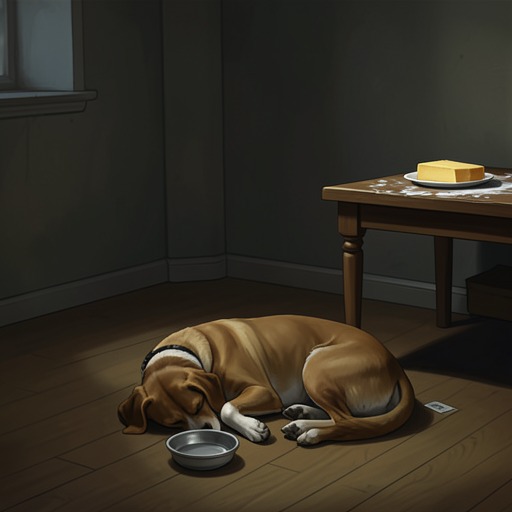
The house is rendered through Molly’s attention to smells, movement, and bodily closeness rather than through a general description of its architecture. After their first night, Clarity carries Molly downstairs to a basement and shows her a low space beneath the stairs. Clarity has made it a clubhouse, with a pillow and water, but its low ceiling requires her to squat. It is a place arranged for a puppy’s immediate needs and, at the same time, a place where Molly can be shut away.
A Hidden Puppy and a Constrained Routine
The bedroom initially offers Molly close contact with Clarity. Molly sleeps in the crook of her arm while Clarity strokes her and tells her that she loves her. In the morning, Clarity carries her outside, then takes her down to the basement before leaving. She blocks Molly into the under-stairs space with boxes and asks her to remain quiet while she is gone. The affection of the bedroom and the confinement below it are therefore parts of the same domestic arrangement: Clarity wants Molly near, but cannot freely keep her visible throughout the house.
Over the following days, the basement becomes the center of Molly’s schedule. Clarity leaves her blocked into the small space for hours, returns to play with her, clean up, and feed her briefly, then comes home again in the afternoon and stays until morning. Molly understands that Clarity is attending school, recalling that Ethan had gone to school too; the comparison explains the absence without making Molly like it. The house consequently holds two rhythms at once: Clarity’s daily departures and Molly’s waiting for her return.
The under-stairs space also becomes a training ground. At night Clarity blocks the entrance with boxes and waits on the other side. When Molly cries or barks, Clarity opens the barrier and reprimands her; when Molly sits quietly, she receives a treat. As the quiet intervals lengthen, Molly learns what Clarity wants from her while she is confined. The arrangement is effective as training, but Molly dislikes being alone there and would rather play other games. The clubhouse’s name and furnishings promise a child’s private retreat; its actual use is to keep a puppy hidden and silent.
Household Tension and Signs of Distress
The house also registers Clarity’s distress in intimate, private moments. In the bathroom, she steps onto a small scale, reacts unhappily to its reading, and vomits beside the water bowl. Molly senses her anguish and tries to comfort her by wagging, climbing toward her, and licking her. The episode places Molly’s care inside a room associated with Clarity’s concealed suffering: she notices the distress and responds physically, even when Clarity does not appear to notice her efforts at first.
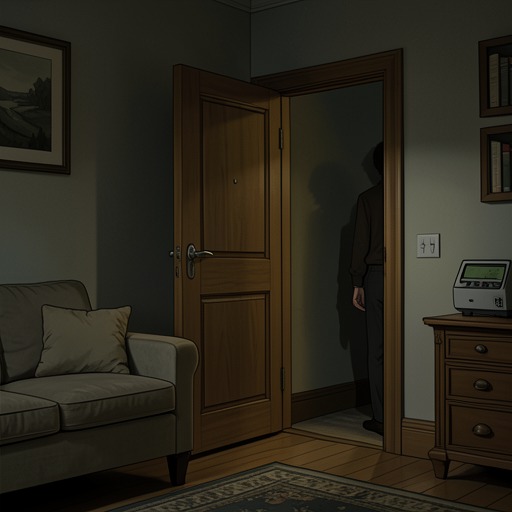
At the front door, the house’s private troubles meet outside scrutiny. After a woman has been on the porch, Clarity carries Molly inside with her heart beating loudly. A paper bearing the visitor’s scent lies on the floor; Clarity picks it up, and Gloria comes around the corner and stops when she sees the puppy. Molly starts toward Gloria to greet her, but Clarity picks her up. The threshold is thus a point of exposure: a complaint has reached the home, and the secret Clarity has been trying to maintain is now in front of Gloria.
Home as Refuge and Authority
Later, the house remains the setting for conflict between CJ and Gloria, but the balance of authority has changed. After CJ returns home eight hours late from being released, she remembers finding Gloria drinking wine in the living room. Gloria then tells CJ that she is grounded for the rest of the year, forbids dating, boys visiting, and phone conversations, and says she cannot leave the house for any reason. The home that once contained Clarity’s effort to protect a hidden puppy now becomes the space within which Gloria restricts CJ’s movements.
Across these scenes, the house is defined less by comfort than by who may enter, leave, or be seen. Molly moves from bedroom intimacy to basement concealment; Clarity’s school schedule leaves her waiting behind boxes; and the paper from the porch brings the outside world to the threshold. Later, Gloria’s grounding makes confinement explicit for CJ herself. The house can shelter a vulnerable companion, but its rooms and barriers also give shape to secrecy, surveillance, and control.